Leyte Gulf
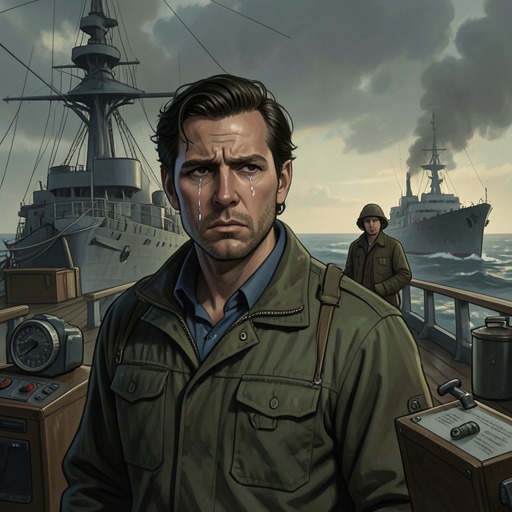
The Caine MutinyLeyte Gulf enters the novel not as a battle scene aboard the USS Caine but as a distant theater whose events arrive in coded dispatches. The news links the great fleet action to Roland Keefer’s work aboard the Montauk, giving the battle a personal consequence for Tom Keefer and the men receiving the reports at Ulithi.
A Battle Seen from Ulithi
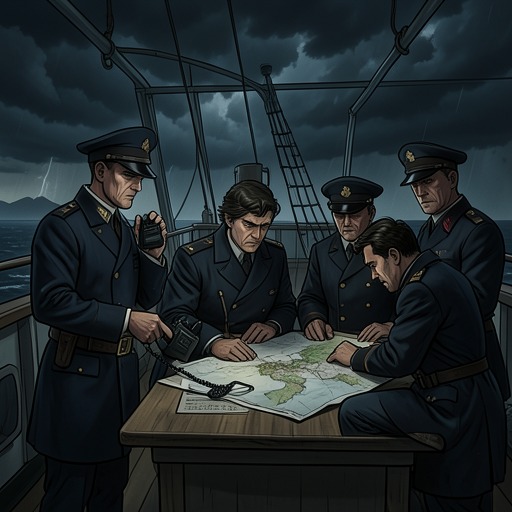
On the morning of October 26, Willie Keith decodes a message about the Battle of Leyte Gulf while the USS Caine is at Ulithi. The battle’s progress reaches the minesweeper slowly, in terse reports of damage and place-names such as Surigao, San Bernardino, and Samar. The contrast is striking: people in the United States know more about the battle than the sailors who fought it, while the men of the USS Caine learn of it at an even greater remove.
When Willie encounters the name Montauk in the message, he takes the unfinished dispatch to Tom Keefer. The coded report turns a broad naval campaign into a matter of family: Roland Keefer, Tom’s brother, is aboard the Montauk. The narrative thus presents Leyte Gulf through fragments of information and the reactions of men waiting far from the fighting.
The Action off Samar and the Montauk
Ensign Whitely later gives Tom Keefer an incomplete account of a surprise encounter between Admiral Sprague’s escort-carrier force and the main battle line of the Japanese Navy off Samar. Rain squalls and smoke screens complicate his recollection. His account becomes more specific when he describes the Montauk: as damage-control officer, Roland took charge after the executive officer was put out of action, and organized the response to fires aboard ship. He also arranged for torpedoes and ammunition to be jettisoned.
Whitely reports that Roland’s conduct had earned him a recommendation for the Navy Cross. The battle’s importance is therefore conveyed not only through fleet movements and damage reports but through the actions of a particular sailor under pressure. For Tom, the news carries both the scale of the battle and the survival and distinction of his brother.
A Fictionalized Historical Setting
The novel’s prefatory note identifies the work as fiction set during World War II and cautions that times and places associated with actual military operations, as well as ship names, missions, and naval procedures, have been altered. It also states that the people and events aboard the Caine are imaginary and that no ship named the USS Caine existed. Leyte Gulf therefore provides a historical frame for the narrative, but the account is not presented as a precise record of real ships’ positions or actions.